Sculptures & Objects
Art meets Artificial Intelligence
Pratiti Basu Sarkar
The Dali Museum in Florida, USA, curated an inventive exhibition on Dali using his art and Artificial Intelligence (AI). The museum did this project to give visitors an opportunity to learn more about Dali—his life and work—from the person who knew him best—Dali himself. Cutting-edge AI techniques were used. It employed machine learning to create a version of Dali’s likeness, resulting in an almost uncanny and ghostly resurrection of Dali.
Visitors could interact with the lifelike Dali on several screens throughout the museum. The technology enabled visitors to experience Dali’s personality and the museum’s collection of his art.
There are dozens of museums in America that are now experimenting with AI. In 2017, the Pinacoteca of São Paulo partnered with IBM to create an AI audio guide that allowed visitors to talk with paintings.
The AI that creates art is called “Generative AI.” It is a system that is “trained” on different available data systems, such as information from history and art, politics, literature, social studies, etc. The systems have already been created by humans and so exist and are operational. Human engineers build generative AI and train it by making it learn from different data systems—so AI is fed and grown by people.
Internationally, many artists use AI as a new tool to augment their creative process, explore new ideas, and go beyond human limitations. Artists use this trained generative AI by giving it prompts, based upon which AI then creates original artworks. The creation of AI is a long process that involves human history, technological engineers, and artists, but it is made by humans.
Reading up about AI and Art made me think about AI. It can write a poem, provide tips on cooking the best dosa and sambhar, but when it comes to mathematics, OpenAI and ChatGPT have sometimes stumbled over complex reasoning.
There are complexities in art—social issues of, say, racial/caste bias. There are ethical challenges, and one wonders how AI represents historical and cultural personalities and events. Also, AI can be manipulated, and it can also be made to be manipulative. Art, on the other hand, is open to interpretation.
The question this raises on AI-generated art is about creativity and “authorship” or “artist.” Who is the “creator”? Is it humans, since the data systems it creates and produces are made by people. Is it the engineers? Or… is it still the “artist” since something is being made? Or is it the “team”? Will this collaboration between man and machine alter our thinking about society? Or do we need “human art” to do that?
What if M.F. Husain met AI? Whose perspective would be presented? The factor of bias is a criticism of AI—the ethical challenges in how AI represents historical and cultural figures. Also, complex reasoning is a stumbling point. I had the privilege of knowing him. I think he would look at AI-generated art with curiosity; he would not dismiss it, but he might be sceptical, since Husain believed that the paint and brush showed the presence of the artist and the artist’s thinking, and that this sense of the artist’s presence was critical when we looked at art. Because art, to be art, has to be reflective and exchange a quiet conversation between the viewer and the artist or the artwork.
The benefits of AI make the challenges seem surmountable. AI is interactive, it can be widely available, and mostly free of admission charges. It brings viewers closer to experiencing art. Art becomes more shared and, more importantly, AI would make art more democratic. Technology makes participation more widely available because it gives more accessibility rights. The physical distance between a person and a museum or gallery is no longer a block in the pathway.
Art has historically been perceived to be leaning towards elitism—that it is for the well-to-do and intellectual—and not for the less privileged. AI, because it brings art into spaces outside museums and galleries, makes encountering art and seeing it proletarian.
Historically, art was done to show realities—landscapes, portraits—more so before the invention of the camera and photography. It presented the actuals without any commentary. Contemporary art might show reality, but a lot of the art we see in these times seem to express opinions and one can only be either Pro-Left and Anti-Right or vice versa. The other word for it is political correctness.
AI can also be made to show opinions depending on the inputs added in its construction, but because it is available to the wide world and can be deleted, it isn’t shown to be a universal and one-sided truth. AI’s pontifications are not to preach; they are done to present AI with a conscience, to make it seem “human” versus being a digital fiction. Yet, it is the still image people take more seriously. Our brains are biased against animation because we connect it to illustrations and comics and see them as seemingly put-together.
AI generated art invites the viewer to be involved and immediate with their response. Paintings, drawings, sculptures which are made by hand also invites the viewer to step in but not necessarily interact with the art physically or immediately.
AI generated works use the art language of image making but don’t require us to be immediate. Art created by human hand also has the factor of permanence and can live (if looked after) forever. AI generated art is about continual change and varied renditions. “Forever” isn’t a word in AI’s dictionary.
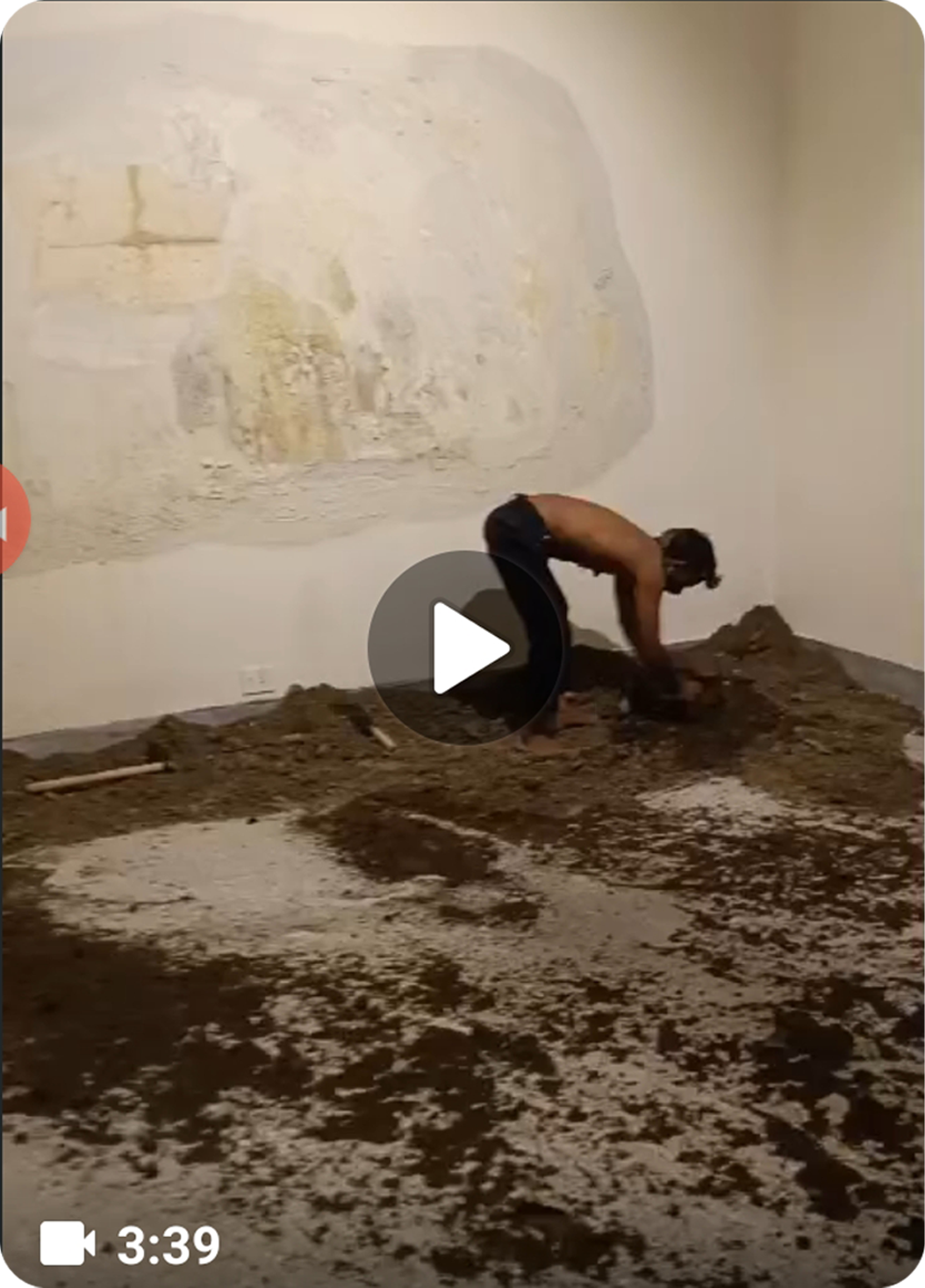
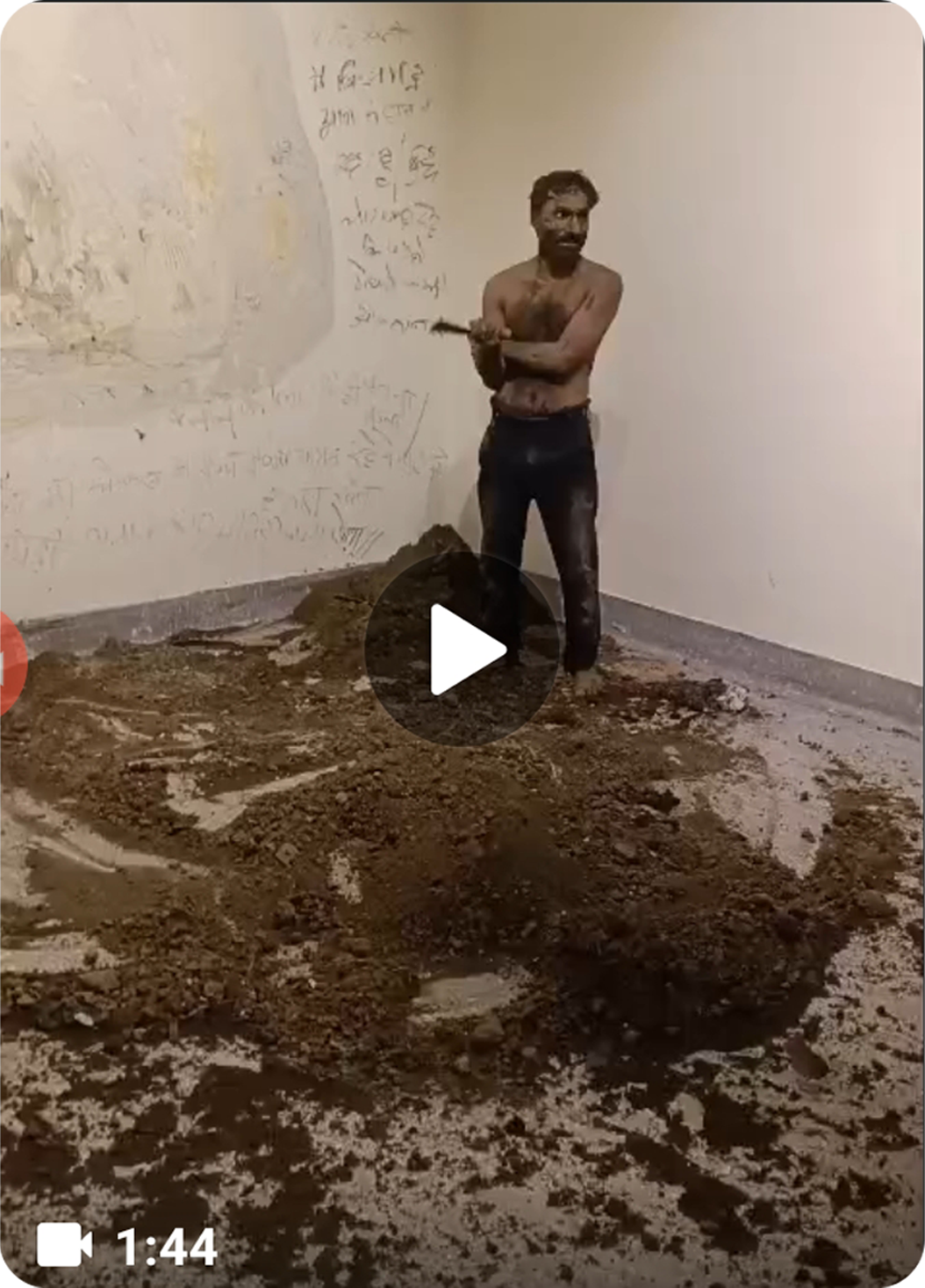 Artist Tejwasi Yadav speaks during a performance art show at Birla Academy of Art and
Culture in Kolkata, India.
Artist Tejwasi Yadav speaks during a performance art show at Birla Academy of Art and
Culture in Kolkata, India.
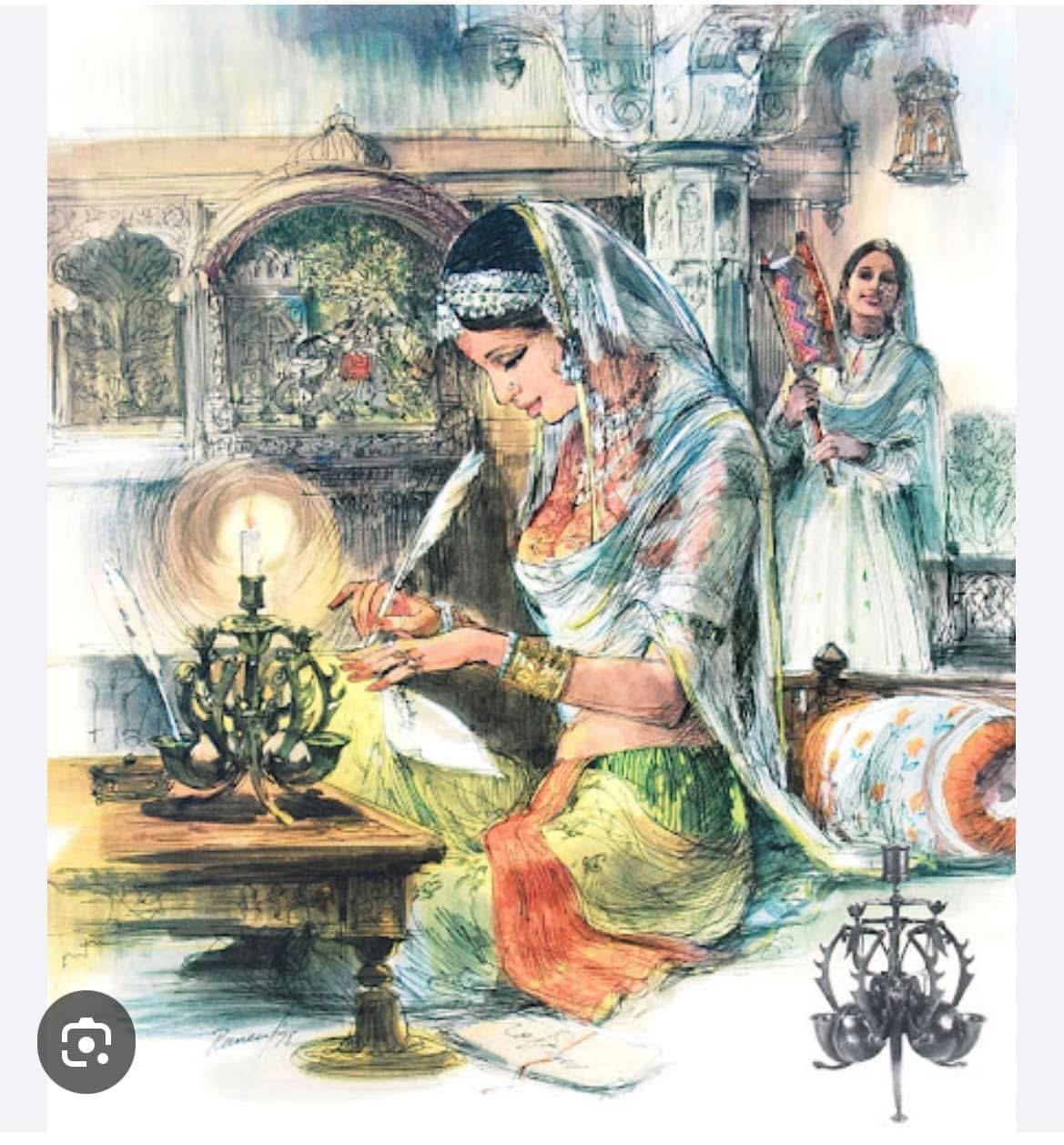 Calendar art of Ranen Ayan Dutt, presenting ancient inkwells
of India. The inkwell, photographed from Shubho Thakur’s collection, is a photograph. An
imagined period picture of a woman of Rajasthani nobility, is seen writing a letter to her
lover.Client was Shaw Wallace. Theme: Inkwells of India.
Calendar art of Ranen Ayan Dutt, presenting ancient inkwells
of India. The inkwell, photographed from Shubho Thakur’s collection, is a photograph. An
imagined period picture of a woman of Rajasthani nobility, is seen writing a letter to her
lover.Client was Shaw Wallace. Theme: Inkwells of India.